BENUE: NO, YOUR EXCELLENCY, ITS GENOCIDE!

By Ben Osawe
His Excellency the governor of Benue state in response to a television interview on June 17, 2025, said the killings in the state cannot be referred to as genocide because there is no evidence of a conspiracy to destroy in part or whole the people of the state.
The question is what is ‘Genocide? Drawing from the definition, in Article 2 of the Convention on the Prevention and Punishment of the Crime of Genocide(1948), the word, ‘Genocide’ is defined as “any of the following acts committed with intent to destroy, in whole or in part, a national, ethnical, racial or religious group, as such: killing members of the group; causing serious bodily or mental harm to members of the group; deliberately inflicting on the group conditions of life calculated to bring about its physical destruction in whole or in part1; imposing measures intended to prevent births within the group; [and] forcibly transferring children of the group to another group.”
To have a robust understanding of why the atrocities being committed in Benue state are referred to as ‘Genocide’, it would be best to look at the situation from the eight lenses of framework from the office of the United Nations Adviser on the Prevention of Genocide (OSAPG). These factors are :
Inter-group relations covering human rights violations committed against a group
We note that the Benue Trough, a fertile region in central Nigeria, has long been a crossroads for various ethnic groups. Drawing on the history of the migrations of different tribes to the trough, as extracted from AIperpexity, we note that the major tribes in Benue State—Tiv, Idoma, Igede, Jukun, Etulo, and Akweya—each have distinct migration and settlement histories shaped by environmental, economic, and political factors. These migrations took place between the late 15th and early 16th Centuries. The Tiv people are believed to have migrated from the Congo Basin in Central Africa, moving through Cameroon before settling in the Benue Valley in the early 15th century. The Idoma trace their roots to the ancient Kwararafa Empire, specifically from a place called Apa, east of present-day Wukari. Political and religious conflicts in Kwararafa during the 14th and 15th centuries led to the dispersal of the Idoma, who migrated along the Benue Valley and eventually settled in their current locations in southern Benue. The Igede people originated from Sabon Gida Ora in present-day Edo State. Conflict with the Ora people forced the Igede to migrate through Nsukka in Enugu State before settling in the Oju and Obi areas of Benue State. The Jukun people are descendants of the Kwararafa kingdom, which spanned parts of present-day Benue and Taraba states. The Jukun migrated from the Gongola and Upper Benue basins, building their first capital at Kwararafa before spreading into the Benue Valley. The Etulo people also trace their ancestry to the Kwararafa kingdom. After the disintegration of Kwararafa, the Etulo chose to remain along the coast of the River Benue, maintaining their traditional occupations as fishermen and farmers. The Akweya are linked to the Idoma, sharing origins from the Apa region of the Kwararafa Empire. Their migration took them through the northern border of present-day Cross River State before settling in the southern part of Benue.
Fulani migration into Middle Belt Nigeria happened between the 16th and 19th Centuries with dominance by 1800. Significant Fulani presence in the Benue Trough was from the 1950s.
Walter Brueggemann’s reflections on the central place of land to humans, cultures and societies enable us to understand what is at play in Benue State, Brueggemann defines land in two ways, firstly, as “actual earthly turf where people can be safe and secure, where meaning and well being are enjoyed without pressure or coercion”, secondly, in a symbolic sense, as used to express the wholeness of joy and well being characterized by social coherence and personal ease in prosperity, security and Freedom”. A symbolic sense of the term affirms that land is never simply physical dirt but is always physical dirt freighted with social meanings derived from historical experiences. In other words, land is a serious historical enterprise concerned with historical power and belonging. Inferred from Brueggemann’s lenses is the fact that the search for safety where meaning and well-being are enjoyed without pressure or coercion”, in addition to a sense of place where there is wholeness of joy and well-being characterized by social coherence and personal ease in prosperity, security and Freedom” resulted in the migrations of the Bebue ethnicities to the Benue trough in 15th and 16th Centuries. We see as we reflect further that to the indigenous nationalities, Benue state has come to be associated with where their safety, security, freedom, location social meanings have been derived from historical experiences and where a sense of destiny is derived from such belonging. To the Fulani, land is key because it is central not only in terms of livelihood but as in terms of power and security reflected in the current posture to grab land seen as both a personal as well as a communal obligation to be pursued. Given the thirst for land by the Fulani herders, Benue state has endured sustained attacks since 2011. These Spread across 16 out of 23 LGAs. Currently, these attacks have happened in the 18th of the 23 Local Government Areas. There were a total of 46 attacks by Fulani Armed Herdsmen before the Ranching Law in 2017. Between 2011 to 2018, a total of 1,983 were killed(Nigeria’s Silent Slaughter). Between 2023-2025, Amnesty International reported that 6,896 people were killed. In June 2025, apart from the recent Yelwata attacks where more than 200 people were reported to have lost their lives, 70 people were killed earlier in various communities. A total of 500, 182 persons are internally displaced in Benue representing 38% of displaced populations in North Central Nigeria. These IDPs are in 26 camps and `85 host communities across Benue state(International Organization for Migration). So, in terms of the violation of the rights of citizens in Benue state, the reference to the tragedy in Benue state aptly fits this criterion.
Circumstances that affect the capacity to prevent Genocide
In order to understand factor (2) above, we would carry out our reflections in this section by looking at the Structures that exist to protect the population and deter genocide including effective legislative protection; independent judiciary and effective national human rights institutions, presence of neutral security forces and independent media.
Several peace meetings were held between the Governors of Benue State, Nasarawa and
Taraba States – with Fulani herdsmen and indigenous communities in attendance.
– 21st January 2016, meeting held in Government House Lafia Nasarawa State
– 11th January 2017, meeting held in Benue Peoples House Makurdi
– 18th January 2017, meeting held in Agatu
On- the 3rd of February, 2017 meeting between Benue and Taraba was held at Moon Kwande and Chanchangi in Taraba state.
These efforts failed to produce peace, resulting in the Ranching Law in 2017. Bill passed by Benue State House of Assembly. The enactment of the open grazing prohibition and ranch establishment law went through a process which included (a)Four public hearings with stakeholders, including herdsmen, farmers, police and other security agencies participating. The Bill was signed into law on May 22nd 2017 with a grace period of six months for the establishment of ranches. The enforcement of the law started on November 1, 2017, with the intent to regulate the rearing of livestock. Miyetti Allah strongly opposed the Benue State Open Grazing Prohibition and Ranches Establishment Law enacted in 2017. The association criticized the law, arguing that it targeted Fulani herdsmen and did not adequately consider their interests or rights. They claimed the law was not inclusive, as they were not invited to public hearings or allowed to make inputs, despite being directly affected stakeholders. Miyetti Allah also stated that the law had not brought peace to Benue and, in their view, had worsened tensions and conflicts.
In response, Miyetti Allah challenged the law in court, but after losing at the Federal High Court, they appealed the decision, maintaining that the process was unfair and that their rights to fair hearing were violated. The appeal court upheld the ruling of the Federal high court in July 2019 and indicated that they would be heading to the Supreme Court. However, there is no evidence of the filing nor a ruling by the Supreme Court on the matter.
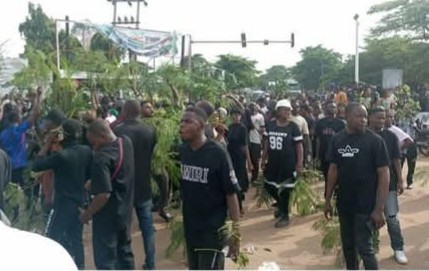
In essence therefore in spite of the legislation by the Benue House of Assembly on the Open grazing prohibition and ranching bill 2017, this did not result in legislative protection. The decisions of the Federal High Court Abuja and the Court of Appeal in a sense reflected judicial independence, despite the existence of the National Human Rights Commission in Nigeria, the cases of killings in Benue state have not been taken up by the commission, this is understandable given that it is a federal government agency and does not have the level of independence to take on these cases. On the neutrality of the military in the face of these attacks, there have been repeated accusations from Benue communities that the military and security forces are failing to adequately protect residents from attacks by suspected Fulani herdsmen. For example, after a deadly ambush near an army camp in Kwande LGA in April 2025, local youths protested by bringing victims’ bodies to a military camp and accused soldiers of neglecting their duty to protect civilians. Eyewitnesses and community leaders have also described attackers wearing army camouflage during some assaults, further fueling suspicions among locals that there may be complicity or at least a lack of intervention by security forces. It is noted however that attackers sometimes wear military-style clothing, but this is not proof of actual military involvement as it may be a tactic to intimidate or confuse victims. In the recent Yelewata attack reports from survivors were that there was local intelligence gathered of an impending attack on Yelewata which was communicated to state authorities, it is not clear though to whom these reports were made, additionally, some survivors noted that the military personnel present stood their ground, resisted and fought gallantly but were too few for the number of attackers and tragically some security personnel paid the supreme price. Media reportage on the killings at Yelewata had been balanced, and sought to provide the facts about the attacks in Benue state since 201 the media had reported incidences of attacks to prevent genocide. On the score of this factor in the OSPAG framework, we argue that the circumstances that affect the capacity to prevent Genocide have not deterred perpetrators of these atrocity crimes.
The presence of illegal arms and armed elements
We would carry out our reflections in this section by looking at whether there exists a capacity to perpetrate genocide – especially, but not exclusively, by killing; How armed groups are formed, who arms them and what links they have to state authorities, if any. Herders involved in attacks in Benue State are reported to use a range of sophisticated military-grade firearms, especially:(a) AK-47 rifles: Multiple sources confirm that herders frequently carry and use AK-47s during attacks. (b)AK-49 rifles and other advanced weapons: According to the Benue State Governor, attackers are sometimes armed with AK-49s and other sophisticated weapons, not just traditional arms(c) Machetes and other sharp objects: There are also reports of victims being hacked, indicating the use of machetes or similar weapons in some cases.
Sophisticated arms from reports and security experts who have spoken on these incidences show that these arms come from(a)Transnational smuggling through porous borders, especially in the Sahel region(b)Local black markets(c) Linkages to organized crime
There is no evidence of who funds herders, some persons have claimed that they have funded themselves while some persons have said that they are armed by interest groups and conflict entrepreneurs. (Aiperplexity)
We argue that the presence of illegal arms and armed elements in Benue state has not been in doubt and in, many cases communities and individuals have raised alarm which has often been ignored for instance, a member of the House of Representatives, Terseer Ugbor, who represents the Kwande/Ushongo Federal Constituency raised the alarm that Fulani herdsmen have taken over about 40 per cent of land in Benue, displacing thousands and causing significant violence and loss of life in his constituency. (This day live, 18th June 2025)
Motivation of leading actors in the State/region; acts which serve to encourage divisions between national, racial, ethnic, and religious groups
The use of exclusionary ideology and the construction of identities in terms of “us” and “them” to accentuate differences, the idea that the farmers are a group that is committed to preventing them (herders) from feeding their animals resulting in economic losses. The interplay of the religious fault lines references farmers as Christians and Herders as Muslims. However, many have argued that many of the herders are not even Muslims and that there have been testimonies of kidnapped persons who have emphatically said that the herders do not even pray and are not involved in practices that indicate that they are Muslim and so there has been the argument that what is at play is economic rather than inspired by religion. In the recent past immediately following the enactment of the open grazing prohibition and ranching law 2017, several sources and local leaders in Benue accused Miyetti Allah, particularly the Miyetti Allah Kautal Hore faction, of making public threats to invade Benue in response to the state’s anti-open grazing law. The former Governor of Benue State, Samuel Ortom during his tenure directly stated that the president and secretary of Miyetti Allah Kautal Hore had threatened to attack Benue and that these threats were later carried out in the form of violent attacks on communities. There is a sense in which current attacks are looked at as part of the unfinished business stemming from those threats against Benue communities. In addition to this are the periodic statements by a so-called Fulani Nationality Movement(FUNAM), now whether this group exists or not is debatable as the group does not seem to have a known location. This group on April 9, 2023, issued a communique after a purported meeting in Gusau, Zamfara State, celebrating recent killings in Benue and warning that the massacres “have just started.” They stated that the current attacks were only a fraction of what they were capable of and referenced conditions given before the election. Earlier, in March 2021, FUNAM claimed responsibility for an assassination attempt on Governor Samuel Ortom of Benue State, describing the attack as revenge for perceived anti-Fulani actions and issuing a warning that anyone opposing Fulani interests would be targeted. These statements by the so-called FUNAM add to the suspicion between groups and tend to enable the commission of atrocity crimes.
Circumstances that facilitate the perpetration of genocide (dynamic factors)
The sustained attacks on the Benue community since 2011 communicate the message of the existence of a longer-term plan or policy to wipe out indigenous communities from their land through the commission of genocidal attacks. The sudden inflow of arms to Fulani herders and the action of state security agencies in mopping up arms even Dane guns and other less sophisticated arms from communities while Fulani herders do not only have access to sophisticated arms but have been shown to openly display them in public without state sanctions communicates the message that there exists a permissive environment created by ongoing armed conflict that could facilitate access to weapons and commission of genocide.
Genocidal acts
To understand factor(6) above, we would carry out our reflections in this section by looking at acts that could be obvious “elements” of the crime of genocide as defined in Article 6 of the Rome Statute, these include killings, rape and sexual violence; ‘ethnic cleansing’ or pogroms and less obvious methods of destruction, such as the deliberate deprivation of resources needed for the group’s physical survival and which are available to the rest of the population.
As mentioned in section(1) above, which bears repeating here, the fact that Benue state has endured sustained attacks since 2011. These Spread across 16 out of 23 LGAs. Currently, these attacks have happened in the 18th of the 23 Local Government Areas. There were a total of 46 attacks by Fulani Armed Herdsmen before the Ranching Law in 2017. Between 2011 to 2018, a total of 1,983 were killed(Nigeria’s Silent Slaughter). Between 2023-2025, Amnesty International reported that 6,896 people were killed. In June 2025, apart from the recent Yewata attacks where more than 200 people were reported to have lost their lives, 70 people were killed earlier in various communities. A total of 500, 182 persons are internally displaced in Benue representing 38% of displaced populations in North Central Nigeria. These IDPs are in 26 camps and `85 host communities across Benue state(International Organization for Migration). Their evidence is clear enough to warrant the classification of what is happening in Benue state as genocide. Additionally, the fact that farmers in Benue state are unable to go to their farms to produce food is a deliberate deprivation of resources needed for the physical survival of the ethnicities in the state. This deliberate prevention of farmers from accessing their farms or wholesale destruction of their crops, when planted, is a strategy of deploying hunger as a tool of war to starve the whole population and cause them to surrender.
Evidence of intent “to destroy in whole or in part …”
The intensity and scale of attacks on the Benue community since 2011( a total of 15 years), the use of military-grade weapons in particular Ak-47s and AK-49s, the shooting, slaughtering, dismemberment, extent of bodily injuries, and burning of adults, women and little children intended to dehumanize the communities and to send a strong message of being in total control over the communities. These represent an intent to destroy in whole or part.
Triggering factors
The armed herders know that the communities had their arms surrendered to the state following an earlier directive by the Nigerian State authorities and therefore unable to protect themselves, additionally, the fact that young people in communities that attempt to put up resistance are arrested by security agencies further exposes communities to attacks by herders.
Conclusion: Given the reflections on what is playing out in Benue State from the eight lenses of the framework from the office of the United Nations Adviser on the Prevention of Genocide (OSAPG), the situation in Benue State, is is appropriately characterized as genocide.
Osawe writes from Jos, Nigeria.

 20
20



Post Comment