INDISCRIMINATE PARKING OF TRUCKS AT MARRABAN JAMA’A
THE NEED FOR URGENT ACTION
By Nenfort Gonchen
Introduction
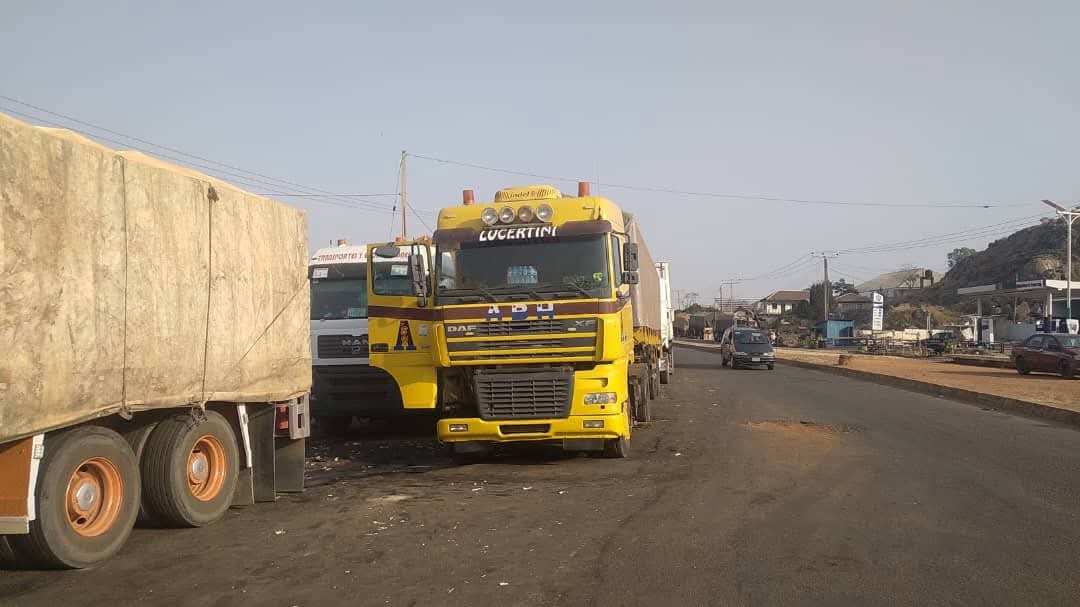
Mararraban Jama’a, at the gateway to Jos, has become a chaotic transport hub. Once a key link between Plateau State and Northern Nigeria, it now faces traffic congestion and disorderly parking by heavy-duty trucks. This indiscriminate parking disrupts traffic and threatens road safety, public convenience, and road durability.
Nature of the Problem
Truck drivers often park haphazardly along the highway shoulders and sometimes right on the carriageway, turning what should be a free-flowing road into a bottleneck. This practice is driven by several factors, including the lack of designated parking bays, long waiting times to offload goods, weak enforcement of traffic regulations, and general indiscipline among road users. During peak hours or at night, the road becomes nearly impassable, with articulated trucks parked in double or even triple rows.
Implications for Road Safety
The safety risks associated with this practice are enormous. Indiscriminately parked trucks obstruct visibility for other motorists, forcing smaller vehicles to take dangerous swerves or drive against traffic. This has led to frequent accidents, including fatal collisions, especially at night when visibility is low. Pedestrians are not spared either, as the encroached shoulders leave no space for safe walking. In emergencies, ambulances and security vehicles often struggle to navigate the congestion, delaying critical responses.
Impact on Road Durability
The continuous parking of loaded trucks exerts enormous pressure on the road surface and shoulders. Most of these roads were not designed to bear static heavy loads for prolonged periods. Over time, this leads to cracking, rutting, and the eventual breakdown of the asphalt layers. Potholes, drainage blockages, and erosion follow, making the road increasingly unsafe and costly to maintain. What should be a long-lasting infrastructure investment is thus rapidly deteriorating due to human negligence.
Socio-Economic Consequences
The economic losses caused by this menace are substantial. Delayed travel times affect transporters, traders, and commuters. Fuel wastage, increased vehicle maintenance costs, and loss of perishable goods are common occurrences. Additionally, the chaotic environment discourages potential investors and tarnishes the image of Jos as a peaceful and organized city. For nearby residents, the situation brings noise, pollution, and safety concerns.
Root Causes
- Inadequate truck terminals or rest areas within and around Jos metropolis.
- Poor enforcement of traffic and parking regulations by road safety and local authorities.
- Absence of effective urban transport planning to accommodate growing logistics activities.
- Weak coordination among transport unions, truck owners, and local government agencies.
Recommendations
- Establishment of a Designated Truck Park: Government should urgently develop a modern truck terminal near Mararraban Jama’a with adequate facilities—restrooms, fuelling stations, and security—to serve as a holding area for drivers awaiting loading or offloading.
- Strict Enforcement of Traffic Laws: The Federal Road Safety Corps (FRSC) and other enforcement agencies must intensify patrols and impose penalties on violators.
- Public-Private Partnership (PPP): Encourage private investors to build and manage parking facilities under government regulation.
- Awareness and Sensitization: Conduct regular campaigns targeting truck drivers and transport unions on the dangers of indiscriminate parking.
- Improved Road Design and Maintenance: Reinforce road shoulders and drainage systems to withstand heavy-duty traffic where necessary.
Conclusion
The menace of indiscriminate parking of trucks at Mararraban Jama’a is not merely a traffic nuisance—it is a threat to life, property, and infrastructure. Addressing it requires a combination of policy enforcement, infrastructural investment, and behavioural change. With proactive measures and collaboration among stakeholders, the area can be transformed from a chaotic danger zone into a model of organized transport management, ensuring safer roads and longer-lasting infrastructures.
Gonchen writes from Jos.

 20
20









Post Comment