When Security Forces Block Security Forces: Who, Then, Is Protecting the People of Plateau State?
“You Don’t Have to Die Defending Your Country, but Your Enemy Should Die Defending His Country” – Anonymous
By Nenfort Clifford Gonchen
At times, a single incident in a nation’s life raises questions far bigger than the incident itself.
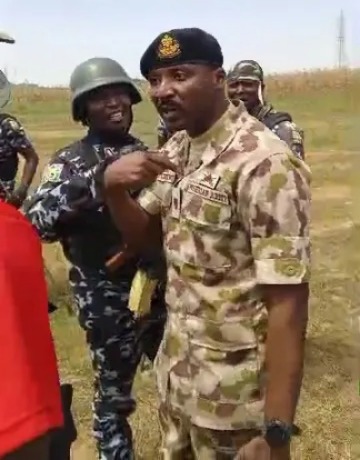
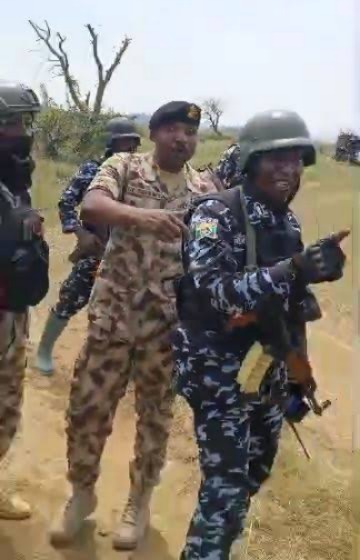
The reported confrontation between a Nigeria Police Force team and Nigerian military personnel during a security operation in Plateau State is one such moment. If it is established that police officers were prevented from accessing an area where suspected armed elements were believed to be operating, then Nigerians must ask an uncomfortable but necessary question: Who benefits when institutions entrusted with protecting citizens appear to stand in one another’s way?
This is not merely a disagreement between two uniformed services. It tests institutional discipline, national loyalty, operational accountability, and the Nigerian state’s determination to protect innocent lives.
The situation becomes even more troubling when viewed against the history of insecurity in Plateau State, where communities have endured attacks, displacement, fear and the painful loss of loved ones. For residents who have repeatedly appealed for protection, reports of a confrontation between security personnel are bound to provoke anger, suspicion and questions about whose interests are being served. The public deserves answers, not excuses.
A Country Cannot Win a War Against Insecurity with Divided Efforts
My position is captured in a statement that may sound harsh but deserves serious reflection: “You don’t have to die defending your country, but your enemy should die defending his country.” The meaning is not that Nigerian security personnel should throw away their lives recklessly or that every encounter must end in bloodshed. It is that those who threaten Nigeria’s peace must never enjoy the advantage of institutional confusion or avoidable operational lapses.
A nation’s security forces must understand the difference between courage and recklessness, between legitimate operational caution and unjustifiable obstruction, and between lawful orders and conduct that undermines the national interest.
No responsible citizen should demand unnecessary casualties among our soldiers or police officers. Every Nigerian in uniform is a human being whose life matters. But the country cannot afford a security culture in which armed criminals exploit rivalries, bureaucratic barriers or competing chains of command to escape justice.
If a location of suspected criminal elements has been identified through credible intelligence, the response should be professionally coordinated, intelligence-led and lawful. The priority must be to protect civilians, apprehend suspects where possible, neutralize imminent threats when necessary, and dismantle the networks responsible for violence.
The enemy should fear the resolve of the Nigerian state, not benefit from confusion within it.
The Uncomfortable Questions Raised by the Reported Jos Incident
Reports published on 24 October 2026 by ViewPoint Nigeria described an alleged confrontation during a police operation in Plateau State, alleging that military personnel blocked a police convoy from accessing an area where armed individuals were reportedly present.
The report also stated that the situation de-escalated after the police unit commander handled the confrontation professionally. These remain reported allegations, not facts, and should not be treated as a substitute for an official investigation.
Nevertheless, the allegations raise important questions that the appropriate authorities need to address.
First, what was the precise mandate of the police team? Were the officers acting on credible intelligence, a lawful directive or an authorized operation?
Second, why was access reportedly denied? Was there a legitimate operational or jurisdictional reason, such as risk of friendly fire, misunderstanding of command arrangements, or some other factor that requires investigation?
Third, if any personnel obstructed a lawful operation without sufficient justification, who authorized that action and what procedures apply?
Finally, what measures are being taken to ensure that any disagreement between security agencies does not compromise civilian protection or public trust?
These questions must not be dismissed as hostility towards either the police or the military. Asking them is an expression of concern for the country and for the men and women who serve it.
Neither accusation nor public speculation can replace evidence. But institutional prestige must not become an excuse for silence.
The Police and the Military Must Not Become Adversaries
The Nigeria Police Force and the Nigerian Armed Forces have different statutory responsibilities, operational structures and chains of command. Those differences are necessary. They are not supposed to become obstacles to national security.
The police have a central responsibility for law enforcement, criminal investigation and the maintenance of public order. The military has a constitutional role in defending Nigeria and may be deployed in support of civil authorities in accordance with the law. In areas affected by persistent armed violence, their responsibilities can intersect.
That intersection requires coordination, not competition. Where military operations are underway, police action must be coordinated through appropriate channels to prevent friendly-fire incidents, duplication and confusion. Equally, clear command-and-control mechanisms should guide how operational conflicts are resolved.
The greatest danger is not simply that two agencies may disagree. It is that armed groups may learn to exploit perceived disagreements. Once criminal elements believe that one agency can prevent another from reaching them, the state risks surrendering the initiative to those who threaten its citizens.
A nation confronting insecurity cannot afford a conflict of egos among its security institutions.
Plateau State Cannot Afford Another Cycle of Fear
For the people of Plateau State, security is not an abstract debate. It is the difference between sleeping peacefully and remaining awake in fear. It is the assurance that farmers can return to their fields, traders can open their shops, children can attend school, and families can travel safely.
The history of violent attacks in and around Jos has made public confidence in security institutions particularly important.
Following the reported Angwan Rukuba incident in March 2026, the military publicly rejected allegations that its personnel had provided cover for attackers, insisting that troops had responded to a distress call and acted professionally. That episode illustrates the importance of establishing facts carefully rather than allowing allegations to become verdicts. Yet it also reinforces a fundamental principle: security institutions earn public trust through visible professionalism, credible investigations and consistent protection of lives.
When allegations of obstruction emerge, the authorities must respond promptly and transparently with evidence. When security personnel perform their duties courageously, they deserve recognition. When misconduct is established through due process, accountability must follow regardless of rank or affiliation.
The people of Plateau State should not have to choose which security agency to trust. They should be able to trust both to work within the law and in the public interest.
Who is the Real Enemy?
The real enemy is the person who takes up arms against innocent citizens, terrorizes communities, abducts people, destroys livelihoods and threatens the peace of the nation. The enemy is also the criminal network that finances violence, supplies illegal weapons, provides intelligence to armed groups or helps perpetrators evade justice.
If evidence shows that any public officer has knowingly assisted criminal elements, abused official authority or deliberately obstructed a lawful operation, due process must take its course. The distinction is essential: we must be uncompromising against criminality while remaining faithful to the law that distinguishes a constitutional state from the forces it seeks to defeat. A security officer’s uniform should signify service to the republic, not immunity from accountability.
The President, Security Chiefs and Commanders Must Act
The Federal Government and the relevant security leadership should treat this reported incident as an opportunity to strengthen joint operations and restore public confidence.
First, the Inspector-General of Police and the Chief of Army Staff, working through the appropriate joint security command, should ensure an impartial review of the incident. The inquiry should examine the orders given, the legal basis for the operation, communications between commanders and reasons for any restriction of access.
Second, the relevant security commands in Plateau State should reinforce protocols for intelligence sharing, joint operations, arrest procedures and resolution of inter-agency disputes.
Third, any credible evidence of criminal complicity, unlawful obstruction or abuse of authority should be referred to the appropriate investigative and disciplinary authorities. Findings should be communicated to the public to the extent that doing so will not compromise legitimate security operations.
Professional restraint is not weakness; it is a requirement of disciplined service.
Finally, community members must be able to provide credible intelligence without fear of retaliation. Security operations should be supported by responsible community engagement and effective mechanisms for reporting suspicious activities.
The objective is not to humiliate the police or discredit the military. It is to ensure that no institution becomes a weak link in Nigeria’s security architecture.
Patriotism Must Be Measured by Duty, Not by Uniform
Patriotism is not established merely by wearing a uniform, carrying a weapon or saluting the flag. It is demonstrated through obedience to lawful authority, courage in the face of danger, respect for human life and loyalty to the constitutional order.
A police officer who risks personal safety to arrest a dangerous criminal deserves commendation. A soldier who stands between an armed attacker and a vulnerable community deserves the nation’s gratitude. A commander who prevents an unnecessary confrontation between security personnel demonstrates leadership.
But any officer who deliberately places personal interest above the protection of innocent citizens betrays the purpose of public service. The same standard must apply to every agency, every rank and every individual.
We cannot demand courage from junior officers while tolerating a system that rewards silence when wrongdoing is alleged. We cannot demand intelligence-led policing while allowing credible intelligence to be undermined by avoidable institutional disputes.
Conclusion: Nigeria Must Never Give Its Enemies an Advantage
The reported confrontation in Plateau State must not be allowed to disappear into the routine cycle of accusations, denials and forgotten investigations.
If the allegations are unfounded, a transparent inquiry should establish that fact and protect the reputations of innocent personnel. If the operation was obstructed without lawful justification, due process should follow.
If a genuine operational concern caused the confrontation, the authorities should explain it appropriately and correct the procedures that allowed the incident to occur. Either way, Nigeria must emerge with stronger coordination, clearer accountability and greater public confidence.
Our soldiers and police officers are not enemies of one another. They are fellow servants of the Nigerian republic, entrusted with different but complementary responsibilities. Their greatest achievement is not proving which institution is more powerful; it is ensuring that the innocent are protected and those who commit crimes are brought to justice.
The men and women defending Nigeria deserve the equipment, leadership, intelligence and institutional support necessary to perform their duties. They also deserve a system in which their sacrifice is not undermined by avoidable conflict. And the citizens of Plateau deserve more than assurances of peace. They deserve a security system that works.
Let this be the moment Nigeria draws a firm line between legitimate operational caution and unjustifiable obstruction, between professional disagreement and institutional rivalry, and between the authority of the state and the interests of those who threaten it.
You don’t have to die defending your country, but your enemy should die defending his country.
Let that statement be understood not as a call for reckless bloodshed, but as a demand for unwavering national resolve: no criminal should find advantage in institutional confusion, and no innocent Nigerian should pay with their life because those entrusted with their security failed to work together.
When the police and the military stand together, criminals have fewer places to hide. When they stand against one another, the people stand alone. Nigeria must never allow that to become our reality.
The views expressed here are the author’s personal opinions and do not represent the editorial stance of this platform.

 20









Post Comment