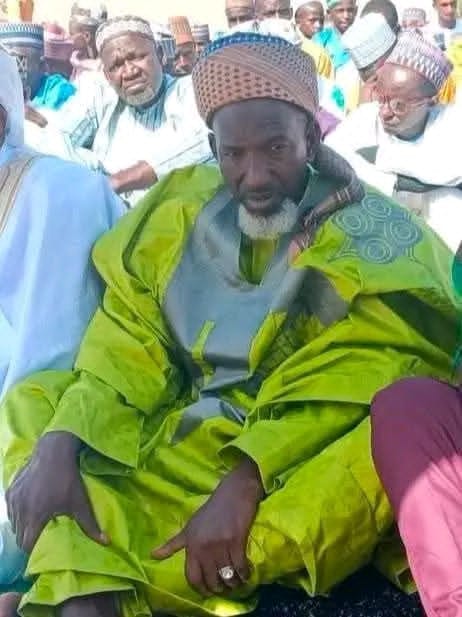
The Case of the Ardo of Mahanga
By Jonathan Ishaku
The shelves of government offices across northern Nigeria sag under the weight of reports on communal violence. After each outbreak, families bury their dead, witnesses come forward, and commissions of inquiry hear testimonies and submit their findings. Then, nothing. The political will that had summoned the inquiry seems to have suddenly vanished just when the time for action on its findings has arrived!
For families who have testified at great personal risk and emotional drain, that government silence and inaction wear down the hope of getting justice. For those who organize violence, it sends a different message. They learn that even when an inquiry turns up leads worth pursuing, the authorities are too terrified to act and are therefore toothless.
This emboldens them to commit greater acts of outrage and gradually builds a wall of impunity. The test of government’s political will comes when the evidence leads investigators to someone with the means or social standing to resist scrutiny.
That is why I regard the arraignment of Mahmoud Adam, widely known as the Ardo of Mahanga, as a significant moment in Plateau’s response to the prevalent violence.
The Plateau State Government brought him before the State High Court in Jos on six counts, including allegations of terrorism and conspiracy. He pleaded not guilty and is presumed innocent.
The court will decide the case exclusively based on the evidence. For me, whatever the eventual outcome of this case, the government’s decision to put its allegations before a judge is what is deserving of attention in a state where families have so often waited in vain for cases to reach the court.
The title of the article follows the name by which the defendant is publicly known, but it embodies a caveat.
The Berom Educational and Cultural Organization identifies the village referred to as Mahanga by its Berom name, Rankum, in Jol Ward of Riyom Local Government Area. I am not Berom, but I write as a citizen who believes that every community is entitled to equal protection under the law. Criminal responsibility is individual. Crime has no ethnicity or religion.
The record of the March 2010 Dogo Nahawa massacre illustrates both what prosecutions can achieve and where it can fall short. The Federal High Court in Jos convicted Dauda Abubakar and Gambo Abubakar of conspiracy and terrorism and sentenced each to 21 years in prison.
Yet in November 2013, the federal Attorney-General’s office told Human Rights Watch that it had no record of any prosecution of the alleged real organizers and sponsors of the massacre, although the two convicted men had named people they said recruited and paid them.
This shows how, unfortunately, when the reluctant state finally decides to prosecute, they choose to be selective. The duty to follow the evidence extends from those who attack to those who may have planned or financed it. But the political will to go that far usually fails!
Every serious crime left uninvestigated buys time for violent groups to consolidate. Security scholar Tamara Makarenko’s ‘crime–terror continuum’ helps explain what these illicit groups can do over time. Criminal gangs and terrorist groups can cooperate, borrow each other’s methods and, under certain conditions, converge.
My research into Lakurawa and the bandit groups led by the “Kachallas” in North-West Nigeria shows how difficult it can be to draw the line between banditry and terrorist insurgency in practice. Groups with different origins and aims can use the same methods to raise money, intimidate residents and impose their authority.
In my view, years of official dilly-dallying with illicit groups gave violent networks in parts of northern and central Nigeria, including Plateau, room to organize and extend their reach.
Timely and thorough investigations and prosecutions could have disrupted some of those networks before they became entrenched.
Nigeria enacted the Terrorism (Prevention) Act in 2011, amended it in 2013 and replaced it with the Terrorism (Prevention and Prohibition) Act in 2022. Federal authorities have since reported thousands of terrorism-related convictions.
For communities enduring repeated attacks in Plateau and the North-West, the measure of progress is closer to home. Was the attack on their village investigated? Were those suspected of planning or financing it questioned? If charges were filed, what became of them? A national tally cannot answer those questions for a family still waiting to hear from investigators.
Under President Muhammadu Buhari, the Federal Government placed too much faith in rehabilitation and reintegration through Operation Safe Corridor while giving too little attention to investigating and prosecuting grave offences.
My research documented cases of recidivism that raise questions about how participants were screened and monitored. Rehabilitation can serve a purpose, and victims remain entitled to an answer. Where evidence pointed to involvement in killings, kidnappings or other serious crimes, what steps did the authorities take to bring those cases to court?
Again, while military operations can protect communities and disrupt armed groups, the courts carry that work forward by determining who bears criminal responsibility. Judges can authorize lawful measures against assets, protect witnesses and require the authorities to justify detention.
They must also give the accused a fair hearing and require the prosecution to prove its case. Those safeguards matter acutely in Plateau, where reprisals had been the knee-jerk response to attacks and have cost people their lives for acts in which they had no part.
A court asks the question a retaliating mob never asks during reprisal. What did this particular person do, and what evidence proves it? Every community, whether Fulani, Berom, Ron, Mwaghavul or Irigwe, has a stake in that question.
Thus, the present approach by the Plateau State Attorney General, Philemon Daffi, SAN, ought to be supported by all ethnic and religious communities in the state.
Governor Caleb Mutfwang’s administration deserves credit for the courage of bringing a high-profile case before the courts and submitting its allegations to judicial scrutiny. The lasting test of its resolve is whether that diligence becomes routine.
Plateau will know that the law has returned when a family in any village can expect a prompt investigation and, where the evidence warrants it, a fair trial, however influential the accused and whoever the victim.
That will be the genuine reset on the path of security recovery for the enjoyment of all communities in Plateau State.
The opinions expressed in this article are solely those of the writer.

 20










Post Comment