ECOWAS Court Judgment on Togo’s 2024 Reform Raises Questions Over Enforcement
ECOWAS Court Found Togo’s 2024 Reform Was an Unconstitutional Change of Government. The Bloc Has Taken No Action
From Lomé to Abuja: The Togo Ruling That Puts Nigeria and ECOWAS on the Spot
Inside West Africa’s Democracy Credibility Crisis: Togo, ECOWAS and the Ruling No One Enforced
The January judgment, which only governments can enforce under ECOWAS rules, has exposed a long-standing enforcement gap as the bloc tries to rebuild after losing three members
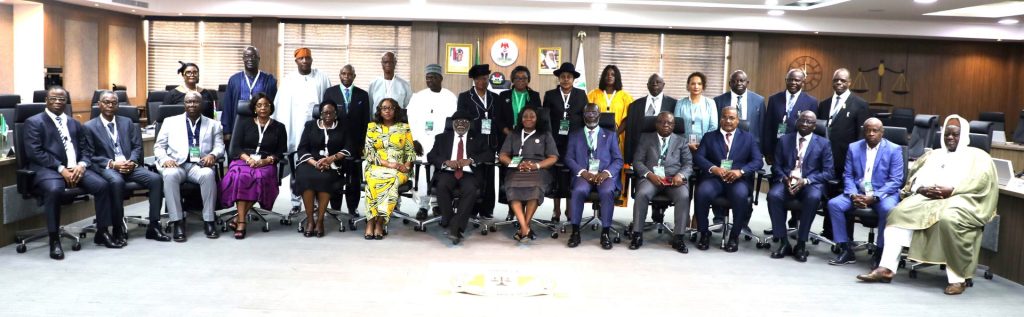
ABUJA — On January 29, 2026, the ECOWAS Community Court of Justice, sitting in Abuja, delivered a judgment in which it found that the constitutional reform adopted by Togo on March 25, 2024, amounted to an unconstitutional change of government within the meaning of the African Charter on Democracy, Elections and Governance.
The judgment, referenced as ECW/CCJ/JUD/01/26 in case ECW/CCJ/APP/15/24, which was brought by the Togolese League for Human Rights and twelve other applicants, was made public in late June 2026, approximately five months after it was delivered.
As of November 2026, there has been no public record identified by the compilers of this dossier indicating steps taken by Togo to comply, nor any public statement identified indicating enforcement action by ECOWAS political organs.
What the Court Found, According to Published Records
According to the published press summary and the full French text cited in the dossier, the Court considered that the reform was designed to circumvent presidential term limits, based on its assessment of timing, content and intended effects.
Among the factors cited in the judgment were that the National Assembly which voted the text was found by the Court to have had its mandate expire on December 31, 2023, that the amendment was adopted without prior national consultation on the eve of legislative elections held on April 29, 2024, and that it provided for the abolition of direct presidential elections while moving executive power to a new post of President of the Council of Ministers, chosen as leader of the parliamentary majority, with no term limit.
According to official Togolese announcements, Faure Gnassingbé, who has led Togo since 2005, has since taken up that post and was sworn in on May 3, 2025.
The legal basis cited was Article 23(5) of the African Charter on Democracy, Elections and Governance, which provides that an amendment or revision of the constitution which infringes on the principles of democratic change of government may constitute an unconstitutional change of government, and the Court ordered Togo to ensure that any future constitutional reforms comply with regional democratic standards.
What the Court Did Not Decide
The judgment also contains important limits that should be reported, as the Court did not annul Togo’s new Constitution promulgated on May 6, 2024, did not impose sanctions, did not award damages, and dismissed the claim that citizens’ right to take part in public affairs had been violated.
It also declared inadmissible the claims brought under the ECOWAS Protocol A/SP1/12/01 on Democracy and Good Governance of 2001, on the ground that, under the Court’s interpretation, private parties do not have standing to sue a member state for breach of that Protocol and that only a member state or the President of the ECOWAS Commission may do so.
According to the judgment, Togo did not file a defence despite reported proper service and was heard in default, and when the judgment was published in June 2026, no immediate public statement was identified from the government, although government-aligned media subsequently presented the decision as confirming that the reform remained in force, while opposition parties, including the Alliance Nationale pour le Changement, were reported as describing it as a severe political, legal and moral rebuke.
Commitments Cited in the Dossier
Togo is a party to several instruments that are cited in the dossier, including the Revised ECOWAS Treaty, whose Article 15(4) provides that Court judgments are binding, the Protocol on Democracy and Good Governance, whose Article 1 sets out constitutional convergence principles, and the African Charter on Democracy, Elections and Governance.
The dossier raises questions about how several provisions should be interpreted, including Article 1(b) of the Democracy Protocol, which provides that every accession to power must be made through free, fair and transparent elections, Article 2(1), which provides that no substantial modification should be made to electoral laws in the last six months before elections except with the consent of a majority of political actors, and Articles 1(j), 1(k) and 22(1), which relate to freedom of association, peaceful assembly and press freedom.
In relation to those provisions, the dossier refers to reports by third parties concerning events in 2025 and 2026, including reports by civil society groups alleging that protests in June 2025 were met with force and that at least seven deaths and dozens of arrests were alleged, reports concerning the temporary suspension of RFI and France 24 in June 2025 and again in April 2026, and reports concerning the detention of two French journalists and a Togolese fixer in July 2026, all of which were attributed to the Media Foundation for West Africa, the Committee to Protect Journalists and Reporters Without Borders, and which have not been independently verified for this publication, while Togolese authorities have been reported as stating that the protests were unauthorized and that journalists had lacked required accreditation.
The Togolese government has also been reported as maintaining that the reform was adopted lawfully under the procedure then in force and as a matter of national sovereignty.
On enforcement generally, figures attributed to a former Chief Registrar indicated that as of March 2026, 37 of 162 enforceable decisions against member states and institutions had reportedly been complied with, representing about 23 percent, while an earlier figure had put compliance at 34 of 141, which underscores broader challenges in implementing Court decisions.
The Accra Precedent as Reported
The third dossier recalls reports concerning attempts to codify a two-term presidential limit within ECOWAS.
According to reports of the 2015 summit in Accra, foreign ministers had on May 18, 2015 adopted by broad consensus a proposal to cap presidential mandates at two terms, but on May 19, Ghana’s then Foreign Minister Hannah Tetteh was reported as stating that two member states had not agreed to sign, namely Togo and The Gambia, which were then the only two members without a two-term limit, and because ECOWAS decides by consensus, the proposal was not adopted, while Senegalese press had also reported that a similar draft had been blocked in 2012 by the same two states.
The two states subsequently followed different paths, as The Gambia experienced a change of government in 2017 after ECOWAS deployed a regional force, whereas Togo’s Faure Gnassingbé remained in office, restored a two-term limit in 2019 without retroactive effect, according to official records, and then adopted a new constitutional system in 2024.
A second attempt was reported in 2022 after protests concerning a third term in Guinea, when, according to an account attributed to Senegalese economist and politician Cheikh Tidiane Dièye, three countries entered reservations ahead of a summit due in Abuja on July 3, 2022, namely Togo, Senegal under then-President Macky Sall, and Côte d’Ivoire, resulting in the clause not being adopted, an account that has not been confirmed by an official ECOWAS document and should be verified with the Commission or participants.
The dossier also lists subsequent events in the region, including third terms reported in Guinea and Côte d’Ivoire in 2020, military coups reported in Mali in 2020 and 2021, in Guinea in 2021, in Burkina Faso twice in 2022, and in Niger in 2023, and the departure of Mali, Burkina Faso and Niger from ECOWAS effective January 2025 to form the Alliance of Sahel States, while noting that Afrobarometer surveys at the time were cited as indicating majority support for term limits, which remains a matter of public opinion rather than legal obligation.
Many analysts have linked the failure to adopt term limits to later instability, which remains a widely shared interpretation rather than a proven causal chain, and coup leaders have accused ECOWAS of protecting incumbents, an accusation that ECOWAS officials have rejected.
Questions Concerning ECOWAS Responses and Regional Positioning
The fourth dossier compares ECOWAS responses over time and notes that ECOWAS sanctioned Togo on February 19, 2005 after the army installed Faure Gnassingbé following his father’s death, lifting those sanctions a week later when he stepped down, and that it suspended Niger in 2009 after a contested referendum, which is presented as evidence that the bloc has previously acted against constitutional changes as well as military takeovers.
Since 2020, the dossier observes that ECOWAS responded firmly to military coups, including suspension and heavy sanctions reported in relation to Mali in January 2022 and Niger in 2023, while no public measures were reported in relation to third terms in Guinea and Côte d’Ivoire in 2020 or in relation to Togo’s 2024 reform, a contrast that has been cited by the governments of Mali, Burkina Faso and Niger upon leaving ECOWAS.
The dossier also notes that enforcement challenges have been highlighted by the Court’s leadership, with a former Chief Registrar reported as stating in Dakar in September 2026 that the Court had been left like an orphan on enforcement.
Regarding Togo’s regional positioning, the dossier refers to reports that during the 2023-24 sanctions on Niger, Togo kept trade routes open while neighbouring Benin enforced closure, that Foreign Minister Robert Dussey was quoted in early 2025 as saying that membership of the Alliance of Sahel States was not impossible, that Lomé launched a Sahel strategy for 2026-2028 on April 18, 2026, and that Togo signed a military cooperation agreement with Russia and that President Gnassingbé met President Vladimir Putin in the Kremlin on November 19, 2025, with attendance at a Russia-Africa summit in October 2026 also reported, all of which Togolese officials have presented as pragmatic diplomacy.
Some diplomats cited in the dossier have argued that pressing Togo could risk pushing it towards the AES and losing a key port, while others have argued that a community that does not defend its own rules risks losing its purpose, and both perspectives are presented as matters of analysis rather than fact.
Why Nigeria Is Described as Central
The fifth dossier argues that the next steps rest in Abuja, where the Court, the Commission and the Parliament are hosted.
As a member state, Nigeria is among the actors that the Court said has standing to bring a case under the democracy protocol, as does the Commission President, and as the bloc’s largest economy and contributor, no Authority decision on sanctions under Article 45 of the Protocol or Article 77 of the Revised Treaty is considered likely without its support.
Nigeria supported the Gambian intervention in 2017 and, as ECOWAS chair under President Bola Tinubu from 2023 to 2025, led the response to Niger, yet as of the dossier’s date no public record of a Nigerian position on the Togo ruling has been identified, nor any public statement from the Commission or the Authority, including at the Freetown summit in July 2026, although absence of a public statement does not in itself indicate a final position.
Other Nigerian institutions are identified as having potential levers, including Senate and House foreign affairs committees, Nigerian members of the ECOWAS Parliament, the Nigerian Bar Association and National Human Rights Commission, and civil society groups, with media encouraged to seek on-the-record positions.
Nigeria’s own compliance record has also been questioned, as rights groups have pointed to ECOWAS Court judgments against Nigeria that reportedly remain unexecuted, a point that the dossier suggests could be raised to ask whether Nigeria will lead by example.
On August 27, 2026, a resolution tabled in the French National Assembly was reported to have cited the ECOWAS ruling, while a Pan-African civil society network was reported to have held a press conference in Lomé on September 3 on the scope of the ruling, both of which remain matters of public record and do not imply endorsement by this publication.
Under ECOWAS law as cited in the dossier, judgments are described as binding, the Court has found that Togo’s reform constituted an unconstitutional change of government under the African Charter and that only governments and the Commission can invoke the democracy protocol, and whether any actor with that standing will act, and whether the institutions hosted in Abuja will act on a ruling made in Abuja, remains the central question that the series seeks to raise for further independent verification by reporters.

 20










Post Comment