Plateau Lands Ministry Cuts C of O Process to 25 Steps, Digitizes Records to Block Leakages
Our Reporter
The Plateau State Ministry of Lands, Survey and Town Planning has slashed the processing stages for Certificates of Occupancy from 46 to 25, rolled out electronic signatures, and digitized land records in sweeping reforms aimed at speeding up service delivery and blocking revenue leakages.
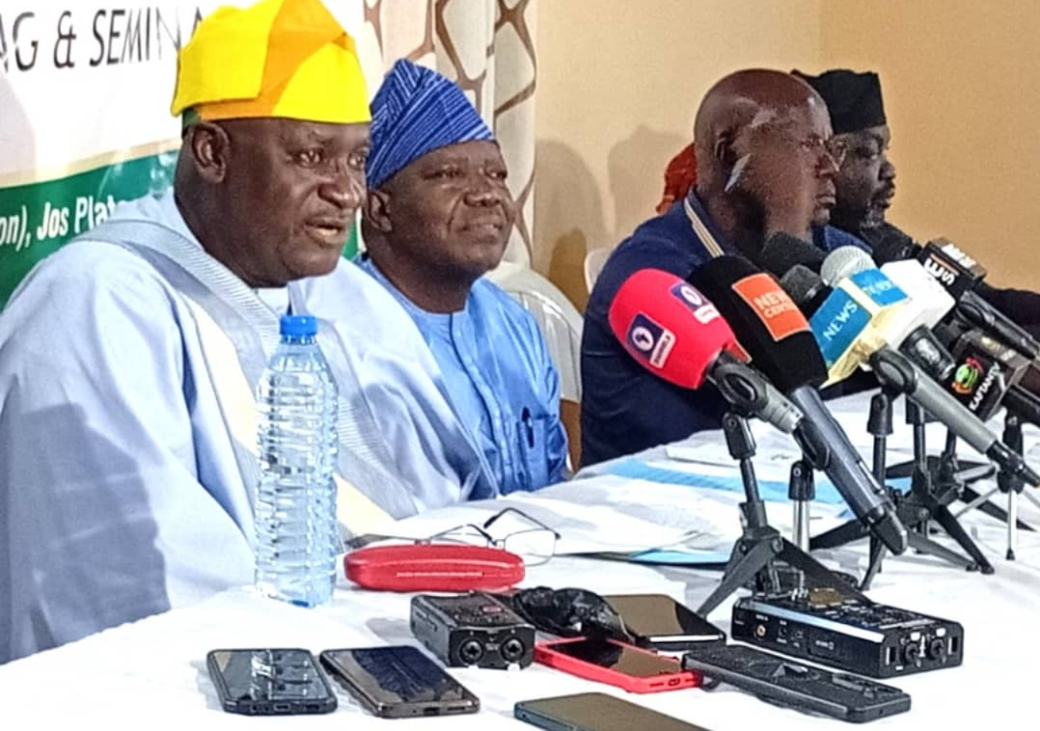
Commissioner Barr. Peter Nyam Gai disclosed the reforms during a briefing at the NUJ Secretariat, Jos.
He said the ministry, which oversees Land Administration, Survey and Mapping, and Town Planning and Development Control, is driving “Transformational Leadership for Effective Management” to challenge the status quo and boost productivity.
Barr. Gai said the ministry inherited serious problems including inadequate working tools, a stagnated GIS platform, poor office accommodation, logistics gaps, low staff motivation, revenue leakages, slow service delivery, poor customer service, and weak synergy among departments.
The reforms, he explained, are designed to improve efficiency, enhance accountability, and ease the process of doing business in the state.
On some of the changes, the Commissioner disclosed that the ministry began gradual digitization to eliminate manual processes adding that workflow for Rights of Occupancy and Certificates of Occupancy was cut from 46 stages to 25.

He added that a centralized dispatch system was introduced, the filing system reorganized, and CCTV cameras installed for security.
Barr. Gai listed other reforms to include the appointment of two additional Deed Registrars, the redesign of security features and electronic signatures on C of O, delivery of Demand Notices through dedicated dispatch riders and the introduction of rebates and incentives to encourage compliance.
To ensure strict compliance with survey and cartography standards, Barr. Gai disclosed that the ministry collaborated with the Nigerian Institution of Surveyors and licensed surveyors to restore survey control signals.
On Town Planning, Barr. Gai explained that site inspections are now carried out with the use of aerial imagery, digital mapping, and geographic coordinates for accuracy.
On development control, he disclosed that regulations were strengthened in urban and rural areas adding that the department is actively involved in the implementation of the Greater Jos Master Plan covering Jos North, Jos South, parts of Bassa, Jos East, Riyom, and Barkin Ladi.
He also disclosed that the ministry’s mediation unit now resolves land disputes speedily thereby cutting litigation bottlenecks.
The Commissioner said internally generated revenue improved through automation, accountability, reduced leakages, and better monitoring.
He however listed shortage of professional and technical staff, inadequate power backup and server downtime, obsolete equipment, insufficient operational funding, need for full GIS upgrade, logistics gaps for field operations, and continuous staff training as some of the challenges facing the ministry.
Barr. Gai said transformational leadership, institutional reforms, staff development, and technology have enhanced efficiency and positioned the ministry as a key driver of sustainable development in Plateau.
He reiterated that that sustained investment in manpower, technology, infrastructure, and logistics remains essential to consolidate gains and achieve the ministry’s long-term vision.

 20
20





Post Comment