REHABILITATION OR RECYCLING TERROR? NIGERIA MUST STOP PLAYING GAMES
By Sa’adiyyah Adebisi Hassan
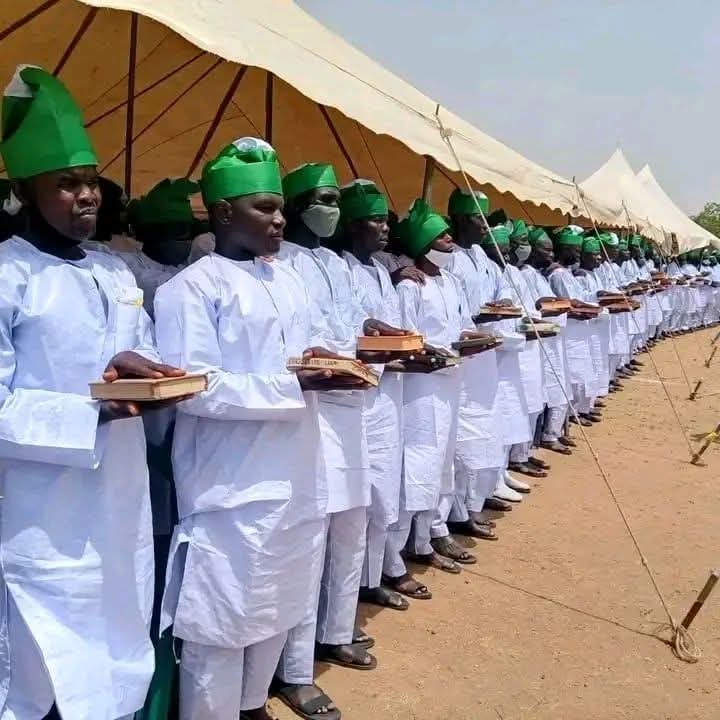
There is something deeply disturbing about watching men who burned villages, slaughtered families, and attacked soldiers stand in front of cameras, place their hands on the Qur’an and promise to “change.”
Not because change is impossible, but because the process feels unserious, rushed and dangerously naïve. This is not justice. This is optics.
A country that has buried thousands cannot afford symbolic gestures disguised as strategy. You do not erase years of indoctrination, violence and ideological conditioning with a few months of “rehabilitation” and a public oath. That is not deradicalization, that is wishful thinking. And worse, it sends a message: that mass violence can be negotiated away.
The question Nigerians should be asking is simple what exactly is being rehabilitated? The body? Or the belief system that justified the violence in the first place?
Because the truth is uncomfortable: many of these terrorists did not act randomly. They acted with ideological conviction. They quoted scripture, invoked scholars like Ibn Taymiyyah and wrapped brutality in religious language to give it legitimacy.
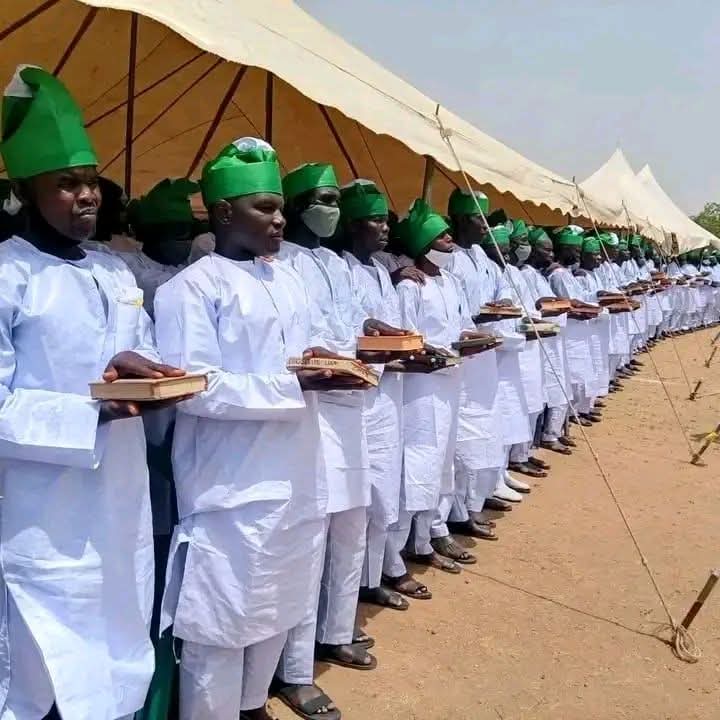
So, when the same individuals return, again invoking the Qur’an, this time to promise peace, are we supposed to pretend that the underlying ideology has magically disappeared? This is where the real failure lies.
You cannot defeat terrorism by ignoring the ideas that fuel it. Bullets may stop fighters, but they do not dismantle belief systems. If anything, poorly handled rehabilitation risks recycling extremists back into society, better trained, less visible and more dangerous.
At the same time, it must be said clearly: terrorism is not Islam.
But here’s the part many avoid, terrorists do weaponize Islamic texts. That is a fact. And pretending otherwise does not protect the religion, it leaves the narrative in the hands of extremists.
The responsibility, therefore, is twofold.
First, the Nigerian state must stop cutting corners. Rehabilitation must be rigorous, transparent and long-term. It must involve psychological evaluation, community reintegration safeguards and continuous monitoring. Anything less is gambling with innocent lives.
Second, the Muslim community, scholars, leaders and institutions must take ownership of the ideological battlefield. Not by accepting blame for terrorism, but by confronting distortions of their faith head-on. Silence creates space for extremists to define Islam in the public eye.
Unchecked preaching, unchallenged radical interpretations and the absence of strong counter-narratives create fertile ground for recruitment. Regulation is not about oppression it is about responsibility in a country already bleeding.
Because the reality is this: victims do not care about technical arguments over whether terrorists “represent” a religion or not. They care about safety. They care about justice. They care about not seeing the men who destroyed their lives reintroduced into society with little more than a promise.
Nigeria cannot afford to be sentimental about security. Forgiveness without accountability is not mercy, it is negligence.
And if this cycle continues violence, capture, soft rehabilitation, release, then we are not solving terrorism. We are managing it. And that is a far more dangerous path.

 20
20








Post Comment