THE SILENCE THAT KILLS: A RESPONSE TO JONATHAN ISHAKU
By Shu’aibu Usman Leman
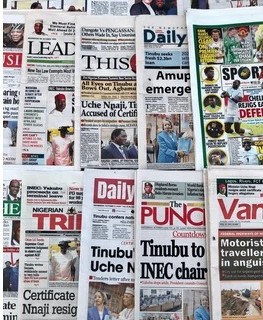
I read Jonathan Ishaku’s recent essay on media silence and its consequences in Plateau State with a profound sense of concern and careful reflection. His intervention is not only timely but necessary, offering a thoughtful and incisive critique of the media’s role in a crisis that has endured for far too long. It is important to state from the outset that I subscribe to Ishaku’s central argument, as much of the substance of this discussion is rooted in the issues he so clearly and forcefully articulated. His essay goes beyond routine commentary; it serves as a challenge to journalists and media institutions to interrogate their practices and reassess their responsibilities in the face of recurring violence.
At the centre of his position lies a deeply uncomfortable but undeniable truth, that while the media does not create violence, its failure to sustain attention on such crises allows them to persist. This observation, which forms the backbone of his essay, speaks directly to the pattern that has come to define reporting on Plateau State. As he carefully outlines, violence erupts, it is reported with urgency, and then attention gradually fades until the next incident commands coverage. This cycle, as Ishaku convincingly argues, carries serious consequences. When public focus diminishes, so too does the pressure on those responsible for ensuring security and governance, thereby weakening the mechanisms of accountability that are essential in any functioning society.
Ishaku’s analysis compels us to face the reality that the media’s tendency to move on too quickly creates space for complacency. Official responses can become routine when scrutiny fades, making it difficult to judge progress or whether actions are simply for appearances. These concerns reflect a troubling reality that calls for a more sustained journalistic response.
A central point, which I fully share, is his critique of the lack of media follow-up on government actions. Plateau State has seen numerous interventions—security deployments, inquiries, and policy initiatives—but few efforts to revisit these measures and assess outcomes. This lack of continuity leaves the public without answers and undermines confidence. Rigorous journalism demands tracking implementation and impact.
The questions Ishaku raises are both pertinent and necessary, and they merit continued emphasis. How many arrests have been made in connection with these recurring attacks? Of those arrested, how many have been successfully prosecuted? What has become of the findings produced by past commissions of inquiry? Why do their recommendations so rarely feature in ongoing public discourse or inform current policy decisions? These questions, as Ishaku makes clear, are central to any serious attempt to address the crisis. By foregrounding them, he exposes critical gaps in media coverage and calls for a more sustained commitment to accountability.
Equally important is the observation regarding the warnings often raised by affected communities prior to outbreaks of violence. These warnings, though sometimes reported, are seldom pursued with the depth and persistence they require. In subscribing to his argument, it becomes clear that this lack of follow-through diminishes the media’s capacity to function as an effective early-warning mechanism. Journalism must extend beyond the immediate reporting of events to include continuous engagement with the conditions that give rise to conflict. Only through such sustained attention can the media hope to contribute meaningfully to prevention, rather than merely documenting it.
The call for more consistent and deliberate reporting is, therefore, both justified and compelling, and it is a position I fully subscribe to. His argument makes it clear that journalism must not end with the initial report of a crisis; rather, it must continue through persistent inquiry and sustained engagement. This requires a shift in editorial priorities, where follow-up reporting and in-depth analysis are treated not as optional additions but as essential components of responsible journalism. Such a shift would demand commitment not only from individual journalists but also from the institutions within which they operate.
At the same time, it is necessary to acknowledge the risks faced by journalists who undertake this kind of work. While this extends beyond the immediate scope of Ishaku’s essay, it remains an important contextual consideration. Many journalists operate under significant threat, and some have paid the ultimate price in the line of duty. Their sacrifices, reflected in my works such as Bleeding Ink, serve as a sobering reminder of the cost of truth-telling. These realities, rather than discouraging rigorous reporting, should strengthen the resolve to pursue the kind of sustained engagement that the Veteran Journalist advocates.
Furthermore, although his focus is primarily on the domestic media landscape, his argument invites a broader reflection on accountability, including the role of international actors. In such cases, scrutiny must be applied consistently and without exception. Accountability cannot be selective, nor should it be constrained by geographical or diplomatic considerations. The same standards must apply to all actors if meaningful progress is to be achieved.
Ultimately, Ishaku’s essay presents a challenge that the media cannot afford to ignore, and one to which I unequivocally agree. The choice it presents is clear: to continue with intermittent reporting or to embrace a more sustained and responsible approach. Agreement with his position must translate into action; otherwise, it risks becoming little more than rhetorical alignment. Silence, as Ishaku persuasively suggests, is not neutral. It has consequences that allow problems to persist and deepen public frustration.
The people of Plateau State deserve more than intermittent attention. They deserve consistent, sustained engagement that reflects the seriousness of their circumstances. If this conversation is to carry any real significance, it must lead to a transformation in journalistic practice—one that prioritises follow-up, accountability, and persistence.
By aligning with Ishaku’s arguments, we make clear that journalism cannot remain a passive observer. Newsrooms and regulators must institutionalise follow-up reporting, track government responses, and hold authorities accountable—or risk being complicit in the cycles of violence they cover. Silence and intermittent attention have real consequences; only a sustained, policy-driven media can protect communities, enforce accountability, and prevent the next tragedy from becoming inevitable.
Leman is a former National Secretary of the Nigeria Union of Journalists (NUJ).

 20
20











Post Comment