‘Not Against Faith, But for Fairness,’ NCA Presses FG over N8.05bn Religious Budget Split
- Northern Christian group says N6.14bn for mosques vs N1.91bn for churches in 2026 budget raises constitutional questions
Our Staff Reporter
When the 2026 Appropriation Bill hit public debate recently, one line item drew sharp criticism from a prominent Christian body in northern Nigeria: the government’s proposed N8.05 billion for religious projects.
The Northern Christian Association, NCA, says the breakdown reveals a problem far beyond numbers. Of the total, about N6.14 billion is allocated to 52 mosque-related projects, while N1.91 billion is allocated to 7 church-related projects.
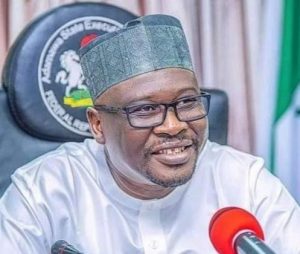
On Monday, July 20, the group’s Chairman, Rev. Joseph John Hayab, asked a direct question: Is this equity?
In its statement, the NCA said it had gone through the budget and found what it called a “glaring disparity.”
The concern, Rev. Hayab explained, is not about whether government should support faith-based initiatives.
“We are not against government partnering with religious organizations,” he said. “But Nigerians must not be given the impression that one faith is being treated preferentially over another. That creates division and erodes trust.”
For the NCA, the ratio roughly 3 to 1 in favour of mosque projects feeds into a larger narrative many Christians in the North say they have lived with for years: unequal treatment in public policy.
The statement struck a careful tone. The NCA acknowledged that Christians across Nigeria have “continued to show restraint in the interest of national peace.” But it warned that restraint should not be read as silence.
“Partiality, lack of equity and unequal treatment remain major factors responsible for division, distrust and the absence of genuine unity among Nigerians,” the group said.
The cleric then asked a question aimed directly at policymakers: “How long will Nigerians continue to read stories that expose the hypocrisy of our leaders?”
He grounded the demand in both law and faith, citing Section 10 and Section 42 of the 1999 Constitution, which prohibit the government from adopting a state religion and guarantee freedom from discrimination.
Rev. Hayab also referenced the teachings of Christianity and Islam, both of which, he said, call for fairness.
The NCA said it is not asking for the budget to be scrapped. It is asking for an explanation.“If government considers it necessary to support religious projects with public funds, such support must reflect fairness and balance,” the association said.
“Government should not establish a system that creates division or gives the impression that one religious community is more important than another.”
The group also stressed that its position should not be misconstrued as opposition to Islam, Christianity, or to government’s engagement with religious bodies. Instead, it framed the issue as one of national cohesion.“Policies that unite Nigerians and strengthen national identity” are what’s needed, the statement concluded.
Budget season in Nigeria often becomes a mirror for deeper tensions, regional, ethnic, and religious. With insecurity, economic pressure, and trust deficits already high, perceptions of favouritism in public spending can have outsized consequences.
The NCA’s intervention comes at a time when faith leaders across the country are being called upon to preach peace amid hardship.
But as Rev. Hayab’s statement suggests, peace also requires the public to believe the system is fair.
As of press time, the Federal Government had not responded to the NCA’s call for clarification on the allocation formula.
For now, the ₦8.05 billion-line item remains in the bill. And for the NCA, the question remains open: In a country of multiple faiths, can public money reflect equal citizenship?

 20
20


Post Comment