Plateau: Solar Power to Replace Generators, Revive a Struggling Economy
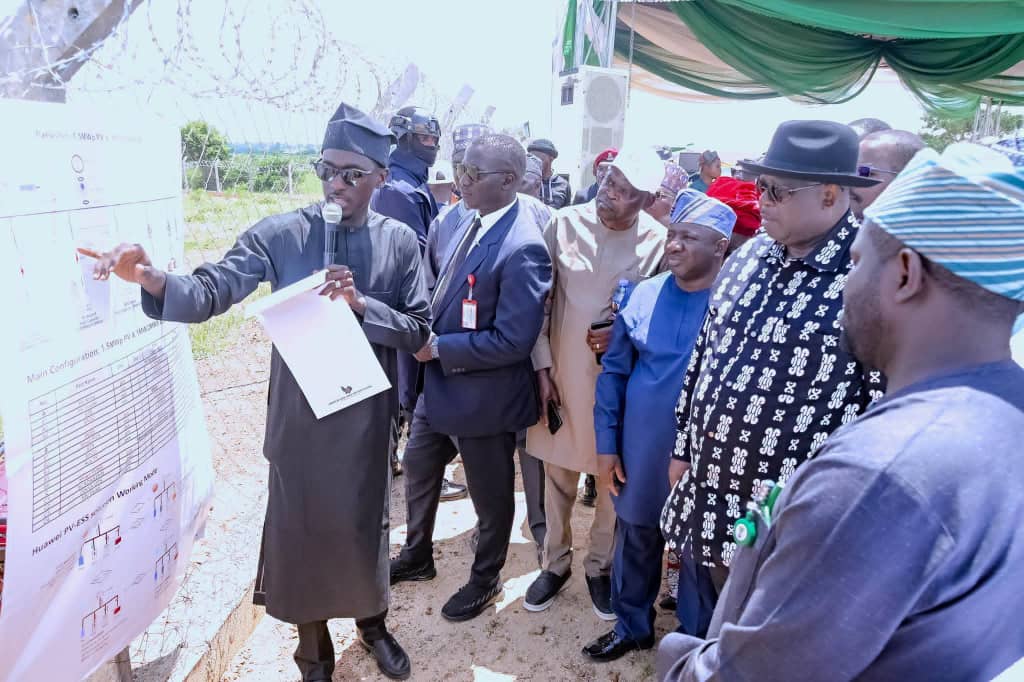
- Gov. Mutfwang launches 1.5MW mini-grid in Pankshin as part of Tinubu’s $750 million renewable push. ‘This is the end of the generator era,’ he says
By Ralph Madugu
For years, the sound of petrol and diesel generators has been the background noise of daily life in Pankshin, a farming town in central Plateau State. Shopkeepers budget for fuel before stocking. Students read by the flicker of small lamps when the national grid fails. Hospitals keep fuel tanks on standby.
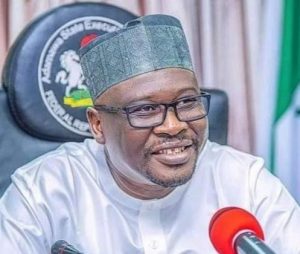
On Monday, July 20, 2026, that routine took a step toward ending. Plateau State Governor, Barr. Caleb Manasseh Mutfwang, joined federal officials to break ground on a 1.5-megawatt interconnected hybrid solar mini-grid in Pankshin, the largest renewable energy project yet launched in the state and a centrepiece of President Bola Ahmed Tinubu’s push to expand electricity access through clean energy.
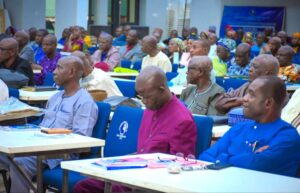
“This is a life-transforming and economy-changing initiative,” Mutfwang told a crowd of traditional rulers, lawmakers and residents gathered under a tent at the project site.
“When this 1.5 megawatts of electricity are delivered, the era of dependence on generators in Pankshin will gradually come to an end, while businesses and industries will flourish once again.”
The Pankshin project is one of 48 interconnected mini-grids being rolled out nationwide by the Rural Electrification Agency, REA, under a $750 million federal renewable energy programme.
The government expects the initiative to attract another $1.1 billion in private investment.
For Plateau, the stakes are high. The state is slated to get about 10 similar mini-grids, making it one of the biggest beneficiaries of the programme.
Managing Director, Rural Electrification Agency, Engr. Abba Abubakar Aliyu said the goal is not just to add megawatts but to rebuild the way electricity is delivered.
“What we are building here is not just a solar mini-grid,” Aliyu said.
“We are rebuilding the electricity distribution network by installing new transformers, rehabilitating existing lines, and providing electricity meters so that consumers will no longer be subjected to estimated billing.”
The Pankshin plant will combine a 1.5MW solar photovoltaic array with a 2MWh battery storage system and a 600KW backup generator.
The project developer, MASK Nigeria Limited, working with Jos Electricity Distribution Company, JEDC, will also install more than 10 transformers and meter every household in the coverage area, according to the company’s technical lead, Lau Mohammed.
Engineering studies, including load assessments and solar analysis, were completed to ensure the system can power homes, schools, clinics and small businesses without interruption.
Plateau is situated in the north-central region, where unreliable power has compounded insecurity, poverty and out-migration.
Businesses in towns like Pankshin, Langtang and Shendam have long operated at a disadvantage, paying three to four times more for diesel than they would for grid power when the grid works at all.
Governor Mutfwang described the project as part of a broader economic strategy. Reliable electricity, he argued, will lower the cost of doing business, attract industry, and keep young people from leaving for Lagos or Abuja.
“Our vision is that within the next two years, Plateau State will not only generate sufficient electricity to meet domestic demand but will also become a net exporter of power,” he said.
To get there, the state government says it is collaborating with the Transmission Company of Nigeria (TCN) and the Niger Delta Power Holding Company (NDPHC) to upgrade transmission lines. It has also passed energy laws to attract private investors, a requirement for REA projects.
The Pankshin groundbreaking comes as the federal government delivers other wins to the state: approval for the Mararaban Jama’a–Pankshin–Langtang–Shendam–River Ibi federal road, and the conversion of the Federal College of Education, Pankshin, into a Federal University of Education.
Governor Caleb Mutfwang thanked President Bola Tinubu directly, calling the President’s support “strategic investments in infrastructure and energy development.”
The challenge now is execution and protection. Mutfwang urged residents, especially youth, to guard the facility against vandalism, a persistent problem for infrastructure projects across Nigeria.
“This is not just about electricity,” Mutfwang said. “It is about dignity, productivity, and the future we are building for our people.”
Commissioner for Water Resources and Energy, Hon. Bashir Lawandi Dati, said the administration has deliberately created the policy environment to make Plateau “a preferred destination for renewable energy investments.”
For residents, the project is personal. Pankshin Local Government Chairman Hon. Amos Felix Benu called it “another promise fulfilled,” while former Speaker of the Plateau House of Assembly, Rt. Hon. Gabriel Dewan, said it showed the value of federal-state cooperation “above partisan considerations.”
REA officials said construction will move quickly, with a target of completion before the end of 2026.
Energy experts say mini-grids like Pankshin’s matter because they address both supply and distribution, the two places Nigeria’s power sector has failed for decades.
By pairing generation with new transformers and meters, the project aims to eliminate “estimated billing,” a source of constant friction between consumers and distribution companies.
For now, in Pankshin, expectations are measured but hopeful. Market women who currently close early to save fuel. Welders who turn away jobs when diesel prices spike. Parents who want their children to study at night without fumes in the house.
The generators, for the first time in a long time, may finally get a rest.

 20
20






Post Comment