CAN @ 50: From a Pledge Debate to a National Voice
Fifty years after church leaders walked out of Dodan Barracks to form a common voice, CAN President Archbishop Daniel Okoh says the umbrella body has survived disagreement, persecution and insecurity because its unity was never about uniformity. Its 50th anniversary is a re-commissioning, not a retirement, writes Ralph Madugu.
When they walked out of Dodan Barracks on August 27, 1976, the church leaders summoned by the military government came to discuss something simple: whether schoolchildren should recite the National Pledge and salute the flag. They agreed, but with a condition: let the pledge be preceded by morning devotion; let children worship their Creator before they pledge allegiance to their country. And then they did something the government did not ask them to do.
They walked a short distance to the Catholic Secretariat at Race Course and asked themselves a bigger question: could the Church in Nigeria speak with one voice? From that afternoon conversation, the Christian Association of Nigeria was born. Fifty years later, that question still defines CAN.
On Thursday in Abuja, its President, His Eminence Archbishop Dr. Daniel C. Okoh, stood before journalists not just to announce an anniversary, but to answer what that voice has meant and what it must become.
He called it “Walking Together in Faith: Celebrating 50 Years of CAN’s Journey.” The phrase, he said, is more than a theme for a banner. It is a biography.
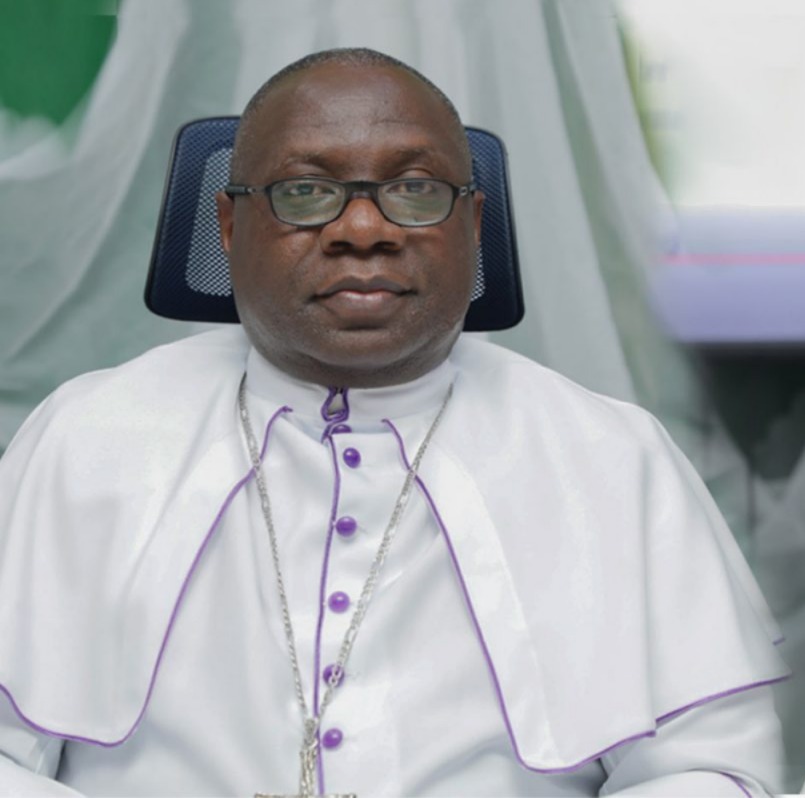
“We have not always agreed. We have had our differences. We have experienced difficult moments, disagreements and leadership challenges,” Okoh admitted.
“There have been times when denominational interests appeared to compete with our collective interests. Yet, through all these seasons, we have remained together. And that, perhaps, is the greatest testimony of CAN at 50.”
It is an unusual testimony in a country where unity is often mistaken for uniformity. Okoh was careful to draw the line. CAN, he said, remains Baptists and Catholics, Anglicans and Pentecostals, Aladura and Evangelicals – distinct traditions, structures and expressions of faith. But there are issues, he said, that are bigger than denominational differences: the dignity of the human person, the welfare of citizens, the peace of the nation. That is why the history of CAN has never stayed inside the church walls. From the beginning, its leaders understood that faith could not be divorced from responsibility.
In the last five decades, that has meant memoranda to the National Assembly, meetings with Presidents and security chiefs, peace missions to burning communities, and quiet humanitarian work in Internally Displaced Persons (IDP) camps where families no longer know if they will return to ancestral homes.
Through its member churches, CAN counts schools, hospitals and relief efforts that have held communities together when government was absent. It is a record Okoh says will be formally documented in a new book, “CAN @ 50; Walking Together in Faith,” to be launched on October 17. He urged Nigerians to read it not as a church history, but as a Nigerian story told through Christian eyes – a story of worship disrupted, congregations displaced, and advocacy sustained. That story is inseparable from insecurity.
At the press conference marking Nigeria’s 66th Independence Day the day before, Okoh congratulated President Bola Ahmed Tinubu and Nigerians at home and in the Diaspora, but his message was sober. For more than a decade, he said, places of worship have been attacked, worshippers killed or abducted, farmers driven from farmlands, children denied education. The primary responsibility of government, he repeated, is to protect life and property.
Citizens, he said, should never have to negotiate with terrorists or bandits to stay alive. He acknowledged efforts by the Tinubu administration to reduce violence but insisted on a fundamental shift from response to prevention. Early warning, he said, must lead to early response, and communities must be enabled to identify threats before blood is shed.
The same clarity shaped his remarks on persecution. CAN, he said, will continue to defend Christians who face discrimination, marginalization or violence because that is part of its mandate. But he rejected the framing that has trailed that advocacy.
“Defending Christians does not mean fighting government. It does not mean hating Muslims. We do not support violence against anyone on account of faith, ethnicity or political persuasion,” he said.
His position was plain: when a Christian is attacked for his faith, CAN will speak; when a Muslim is attacked for his faith, it should also speak; when any innocent Nigerian is killed, everyone must speak.
He cautioned the media against reducing every Nigerian conflict to a Christian-versus-Muslim narrative, saying some conflicts have genuine religious dimensions that must never be ignored, while others are driven by ethnicity, land, political power and criminality.
Understanding that complexity, he argued, does not diminish persecution where it exists; it helps confront it. It is a balance Okoh returned to when defining CAN’s relationship with the state. CAN, he said, is neither an opposition party nor a praise-singing organization.
Where government promotes welfare, CAN will support it. Where it makes progress, CAN will acknowledge it. Where citizens suffer, it cannot remain silent. Respect for the office of the President, he said, must coexist with loyalty to truth. That test will come again as Nigeria approaches the 2027 general elections.
Okoh’s appeal to politicians was direct: place Nigeria above ambition, make campaigns about ideas for improving lives, and stop weaponizing religion and regional sentiment.
Political leaders, he said, must take responsibility for their supporters and discourage hate speech and intimidation. After every election, he reminded them, we remain one nation.
The same concern runs through his reading of the economy. The rising cost of living is not a statistic to CAN; it is what pastors see every Sunday when people come with hunger, medical bills, school fees and rent.
Economic reform, he said, cannot be an abstract exercise divorced from ordinary families, and public office must be recovered as a trust, not an opportunity for enrichment.
If the last fifty years were about getting everyone to the table, the next fifty, Okoh said, must be about what is done at that table.
He spoke of a CAN that is more united in purpose, stronger in institutions, more credible in public engagement, more present at the grassroots, and more intentional about those who will inherit it. That means making real space for young people who are not merely electoral crowds but innovators and future leaders, and for women whose courage and enterprise have been evident but whose leadership opportunities remain limited. It means not standing at a distance from digital technology and artificial intelligence, but equipping young Christians to shape those tools for good rather than merely consume them. It means pulling together work already being done by the blocs on climate change, flooding, drought and food insecurity that weigh heaviest on the poor, into a unified witness for stewardship of creation. And it means building bridges.
Okoh said Nigeria does not need religious communities that live as permanent enemies.
Interfaith engagement, through a strengthened Nigeria Interreligious Council, does not require compromising convictions, he said, but allows faiths to defend their rights while respecting the dignity of others and working together for peace and development.
Under his leadership, he noted, CAN has deepened engagement with government and international partners on mental health, gender-based violence and maternal health, expanded its partnership with Oasis International to make the Africa Study Bible accessible to pastors in hard-to-reach areas, convened a National Church and Denominational Leaders’ Summit, and begun work on an Airport Chapel and Pilgrims Centre at the Nnamdi Azikiwe International Airport in Abuja to serve travellers and pilgrims.
But he was also honest about what must improve. An organization with a national mandate, he said, needs professional, transparent and responsive systems.
In an age where information travels in seconds, CAN must communicate faster, tell its own story and respond to misinformation responsibly.
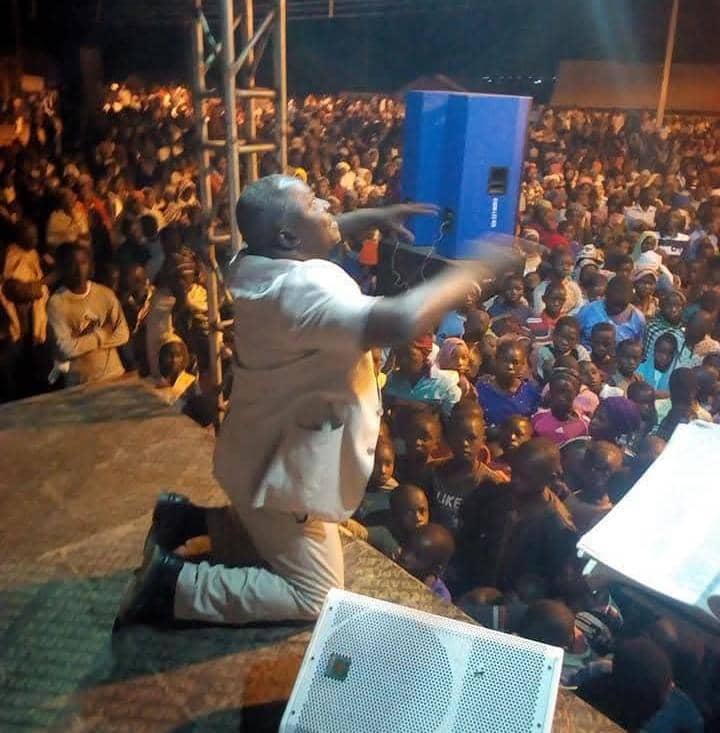
The Golden Jubilee, which begins with a road walk through Abuja on Saturday morning, will unfold over two weeks: a crusade with Dr. Paul Enenche, football matches between the six geopolitical zones, an ecumenical workshop, a Bible quiz among the five blocs, charity visits, a women and youth assembly, a colloquium on CAN’s position on national issues, a music cantata, awards to Nigerians who have impacted Christianity and the nation, and finally a thanksgiving service on October 18. Okoh closed not with nostalgia, but with a recommitment.
“CAN at 50 is not a retirement celebration. It is a re-commissioning. We are gathering to look backward with gratitude, inward with honesty and forward with courage,” he said.
Fifty years after that walk from Dodan Barracks, the prayer remains the same: That they all may be one.

 20
20




Post Comment