Political Will, Good Governance Key to Curbing Ethnic Militias, Resource Conflicts – Gov. Mutfwang
Our Reporter
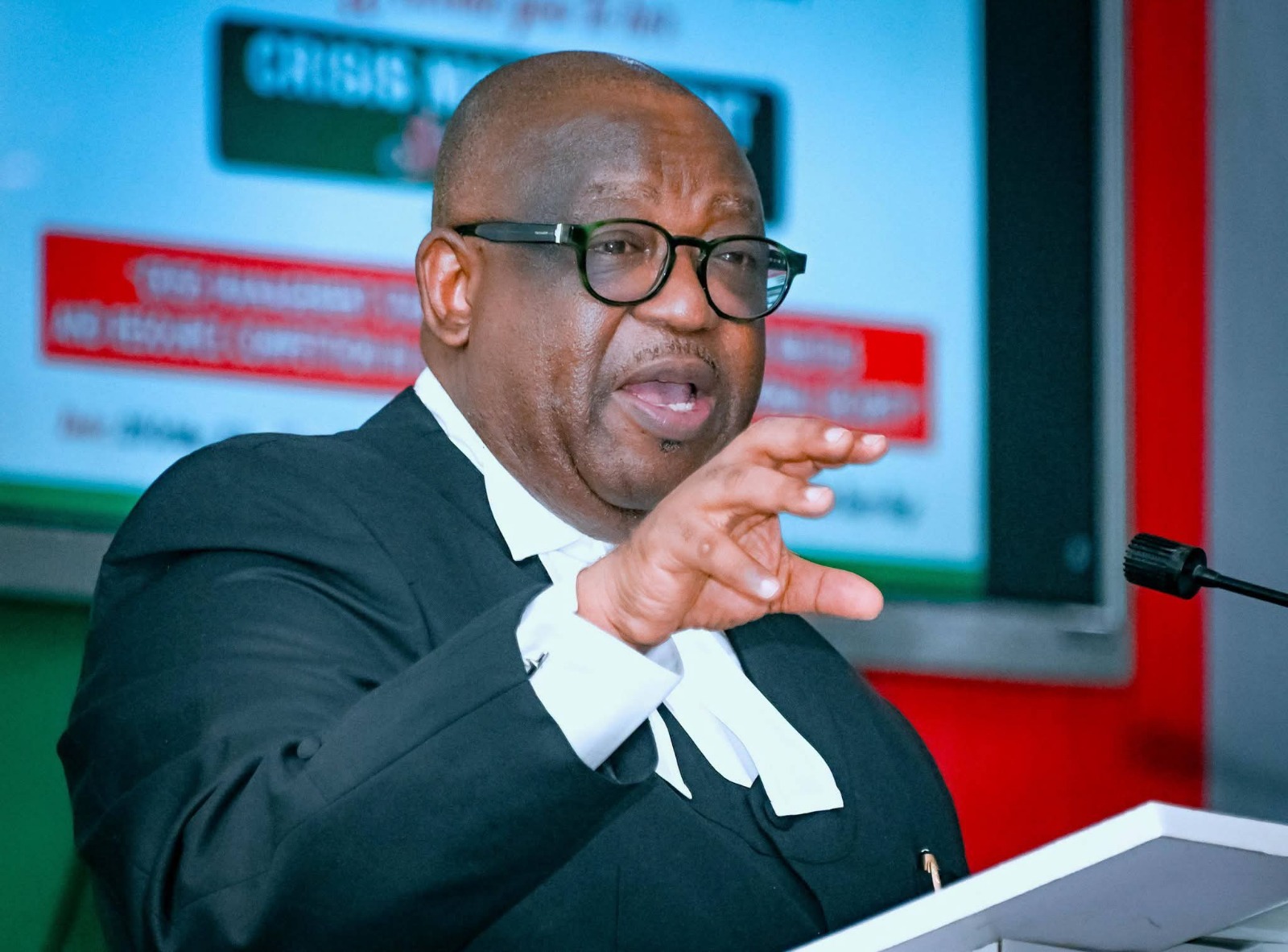
Governor Caleb Mutfwang of Plateau State has said political will, good governance and strategic communication are essential to curbing violent conflicts and ethnic militias in Nigeria and across Africa.
The governor stated this while delivering a lead paper at a crisis management seminar organized by the Directorate of Simulation and Crisis Management in collaboration with the National Institute for Security Studies, NISS, for participants of Executive Intelligence Management Course 19, EIMC 19, 2026.
The seminar, with the theme “Crisis Management Strategies for Addressing Ethnic Militias and Resource Competition in Africa: Implications for National Security,” was held at the Rivers Learning Centre, NISS, Bwari, Abuja.
Drawing from Plateau State’s experience, the governor said persistent security challenges in Africa are rooted in the complex relationship between population growth, competition for scarce resources and the struggle for survival.
He explained that as communities expand, pressure on resources such as oil, minerals, agricultural land and freshwater intensifies, creating tensions that can escalate into violent conflict when compounded by social, political and economic inequalities.
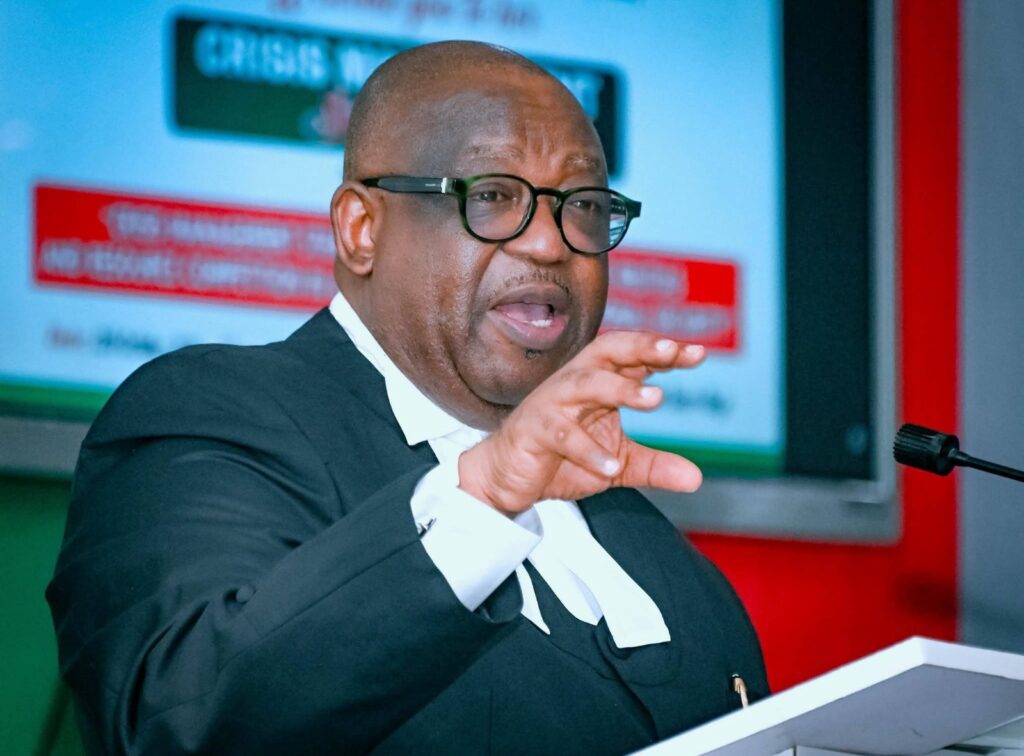
Mutfwang said ethnic militias often emerge in such contexts, but warned against simplistic narratives.
He cautioned against mischaracterizing violence in Plateau State as mere herder-farmer clashes, urging security practitioners to interrogate patterns, actors and motives behind attacks.
“How do you explain attacks on sleeping communities and forcible displacement of indigenous populations from ancestral lands without thorough investigation?” he queried.
He cited the March 2010 attack on Dogo Nahawa, Dyemburuk, where over 500 people were reportedly killed, and the coordinated Christmas Eve 2023 attacks on communities in Bokkos Local Government Area as tragic reminders of the devastating consequences of communal violence.
According to him, such incidents demand security responses informed by accurate intelligence and clear understanding of local realities.
The governor listed drivers of communal conflicts to include competition for natural resources, demographic pressure, migration, political manipulation and sponsorship of ethnic militias, struggle for political power and territorial control, and proliferation of small arms and light weapons.
To address the challenges, Mutfwang outlined practical measures including strengthening good governance and inclusive political participation, equitable distribution of resources, improving early-warning and early-response mechanisms, promoting dialogue, mediation and reconciliation, enhancing capacity of security institutions, and curbing arms proliferation.
He also advocated deliberate action to tackle poverty, unemployment and youth radicalization, alongside stronger inter-agency coordination, strategic communication and decisive action against misinformation.
“Effective crisis management requires more than reactive security operations. Sustainable peace can only be achieved when governments confront root causes of conflict while building public trust and strengthening institutions,” Mutfwang said.
He commended the Department of State Services (DSS, Plateau State Command, for intensifying intelligence gathering and professional response to security challenges in the state, stressing that timely intelligence and responsible communication remain indispensable.
In his remarks, the Commandant of NISS, J. O. Odama, commended Governor Mutfwang for what he described as a thought-provoking presentation, expressing confidence that the insights would deepen participants’ understanding of complex security challenges and enrich their capacity to develop sustainable crisis management approaches.
The seminar was organized for participants of EIMC 19, 2026.

 20
20









Post Comment