How Persecuted Christians Are Forced into Displacement
Our Reporter
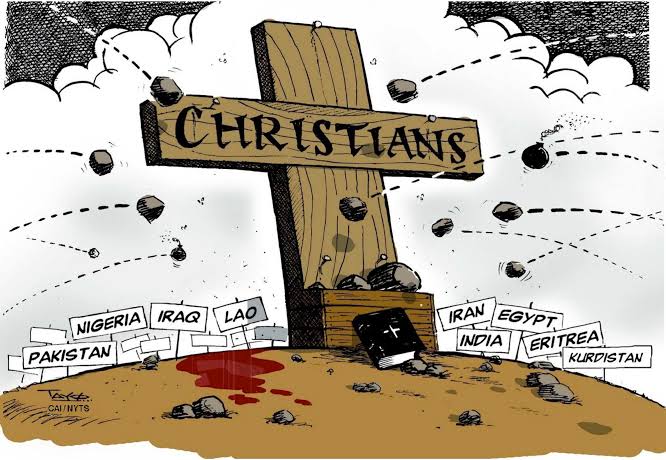
For millions of Christians around the world, fleeing home does not mean escaping persecution. It means carrying it into exile.
A growing global focus on forced displacement is exposing how religious targeting, combined with conflict and systemic human rights violations, is driving Christians from their homes only to leave them vulnerable to fresh violence in camps and informal settlements.
Forced displacement refers to the involuntary movement of people within and across national borders due to conflict, violence, disasters, persecution and severe human rights abuses. It includes refugees, asylum-seekers, Internally Displaced Persons (IDPs) and stateless people.
According to the UN refugee agency, UNHCR, West and Central Africa alone hosted 12.7 million forcibly displaced and stateless individuals as of April 30, 2025, including 8.2 million IDPs and 2.9 million refugees and asylum-seekers. The figure marks a 48 percent increase since 2020, when 8.6 million people were recorded as displaced.
Nigeria, Burkina Faso and Cameroon remain the hardest hit, accounting for 44 percent, 25 percent and 12 percent of the region’s IDPs respectively a reflection of unrelenting insecurity in the Lake Chad Basin and the Central Sahel.
The majority of refugees originate from Sudan, the Central African Republic and Nigeria, which together account for nearly 75 percent of refugee outflows in the region. Behind the statistics, however, is a hidden pattern of family separation. In some cases, men leave to find work while wives and children remain at home. In others, women and children flee while men stay behind to protect homes and farmlands, a division that deepens vulnerability and trauma.
Rights groups warn that while most people affected by violence remain in place and attempt to rebuild their lives, millions who flee in search of safety face new threats. For religious minorities, those risks are multiplied.
“Fleeing violence does not mean escaping violence,” notes the Open Doors report, Church on the Run. IDPs and refugees remain vulnerable to physical, sexual, verbal and psychological abuse, as well as denial of aid and access to resources.
During the COVID-19 pandemic, for example, there were multiple reports of Christian IDPs being denied aid or receiving disproportionately less in displacement camps.
Women and girls face compounded dangers. Rohingya women and girls in Myanmar, vulnerable as females, refugees and members of an ethno-religious minority, are highly exposed to sexual and gender-based violence with long-term consequences.
In Nigeria, Christian IDPs have been attacked long after being uprooted. In October 2023, 11 women searching for firewood a few kilometres from their informal camp in northern Nigeria were raped at gunpoint by Fulani extremists, the same group accused of attacking their home villages.
“They remain vulnerable to further attacks on a daily basis because Fulani herders have boxed them in,” a local expert told Open Doors. “Fulani herders visibly surround the camps guarding their cattle. Anytime IDPs leave the camp, it is a matter of life or death.”
The violence is not isolated. On Good Friday in April 2023, an attack on an IDP camp by Islamic extremists left 32 Christians dead, most of them women and children whose husbands and fathers had already been killed or had left to seek income.
“During conflicts it is predominantly men who are killed. In displacement settings the risk for women increases as there are fewer men left to target, or indeed protect them,” the report states. The division of families through displacement, it adds, creates lasting challenges for the emotional, physical and spiritual wellbeing of children and youth.
Amid the crisis, local faith actors are proving to be vital first responders. According to Open Doors’ 2022 report, The Faith Factor, local churches possess deep social capital, community trust and a long-term commitment to their areas that many international humanitarian organizations lack.
In Sudan, Catholic nuns have opened their convents to IDPs, including those of other faiths.
In Cameroon, local faith leaders distributed relief packages that included Bibles to displaced Christians.
In Nigeria, the Shalom Trauma Center provides long-term support to victims of trauma and gender-based violence, while training church leaders to offer trauma care.
Humanitarian agencies warn that unless faith-based vulnerabilities are recognized and psychosocial support is prioritized, displaced Christian communities will continue to face violence long after fleeing.
As one aid worker summarized: displacement is not the end of persecution. For many, it is only a new setting for it.

 20
20






Post Comment